

The Short Answer
Gravel riding and mountain biking both take you into the outdoors, but that's roughly where the similarity ends.
Gravel is about covering long distances on mixed unpaved terrain — fire roads, canal paths, farm tracks — on a bike built for speed and endurance.
Mountain biking is a little more rugged, it's about technical terrain: roots, rocks, drops, and singletrack, on a bike built to absorb impact and handle at low speed under pressure. One is an endurance discipline with a drop-bar bike. The other is a technical skill sport with flat/riser bars and suspension.
Both will wreck your average pair of socks in record time. Learn more about technical features.
What Is Gravel Riding?
Gravel riding sits somewhere between road cycling and mountain biking, though it's very much its own discipline now, with its own bikes, events, and (inevitably) its own strong opinions on tyre width.
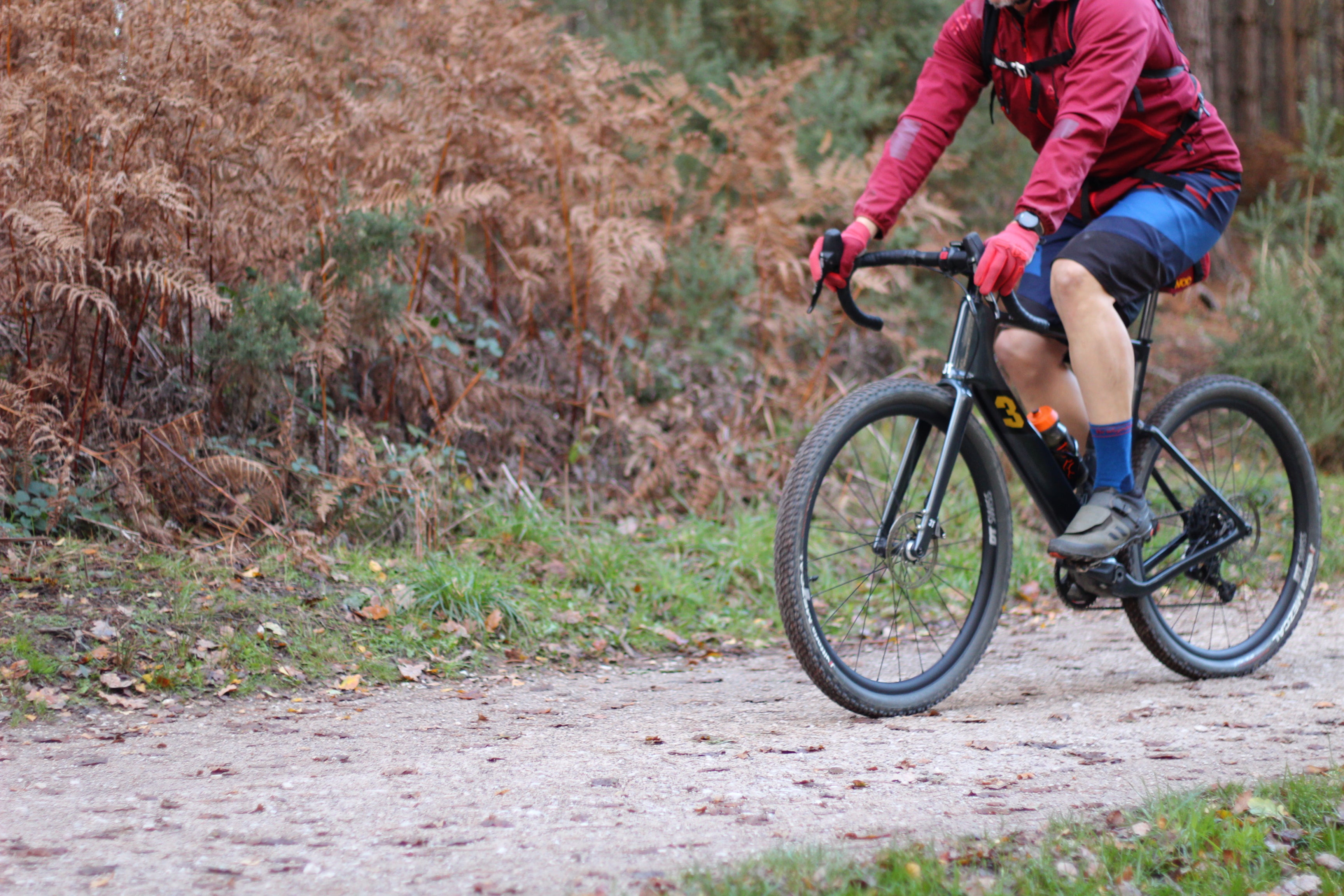
At first they just look like road bikes, but it's the technical small details that make Gravel bikes different .
The terrain is unpaved but rideable at pace: forest roads to gravel tracks. It's less about technical obstacles and more about distance, rhythm, and self-sufficiency — gravel rides are often between 65 to 200 km in distance.

What Is Mountain Biking?
Mountain biking has a lot more to it than most of us realise — from Cross-Country (XC) riding to Enduro — but the common thread, not just in your socks, is technical terrain.
The terrain is the whole point: singletrack, rocks, roots, and drops. Speed is often secondary to control. A good day on the trail might only cover 20–30km, but every second demands your full attention.
Key Differences at a Glance
| Gravel | MTB | |
| Terrain |
Fire roads, gravel tracks, farmland |
Singletrack, rock gardens, roots, drops |
| Typical Distance | Long 50 - 200 km | Shorter & technical - 10-40 km |
| Sock Pick | Summer Weight Coolmax | Mid Weight Merino Wool |
Why Your Socks Matter More Than You'd Think
Cyclists will happily debate tyre pressure to the decimal point and then give no thought whatsoever to what's on their feet. That's a mistake, because the demands gravel and MTB place on your feet can wear them down..
Gravel riding means hours in the saddle with your feet doing repetitive, low-impact work — but for a long time, often in variable weather with no shelter for miles. Moisture management and consistent cushioning over distance matter more than anything else.
Mountain biking is shorter but far more dynamic — your feet are absorbing impact, tilting through technical sections. You need targeted cushioning along the side of the foot to soften and protect against any harsh movements.
Fibre choice and how their made makes a difference.

The Basic Sock Mistake
If there's one piece of kit that undoes good bike prep, it's your non-technical, supermarket bought socks.
A cotton sock does have benefits when it's a blend of fibres, but the basic sock contains a majority of cotton, this absorbs moisture and holds onto it.
On a long ride, that means a sock that starts the day fine and ends it cold, damp, and heavier than when you put it on — a reliable way to invite blisters on mile eighty.
That's why we use technical blends. Our Merino and synthetic blends that manage moisture instead of holding onto it, with cushioning targeted to the pressure points each discipline needs, and our socks have a memory - it bounces back to the original size after every wash. Read the full features.
Choosing the Right Sock for Your Ride
For gravel:
Think about the distance and prioritise breathability and consistent, Coolmax Summer weight is ideal. You want a sock that performs the same at hour six as it did at the start.
For mountain biking:
Look for something with dense targeted cushioning for the key impact areas, and enough durability to handle repeated impact loading. Our Mid Season weight has the perfect balance of this.

