

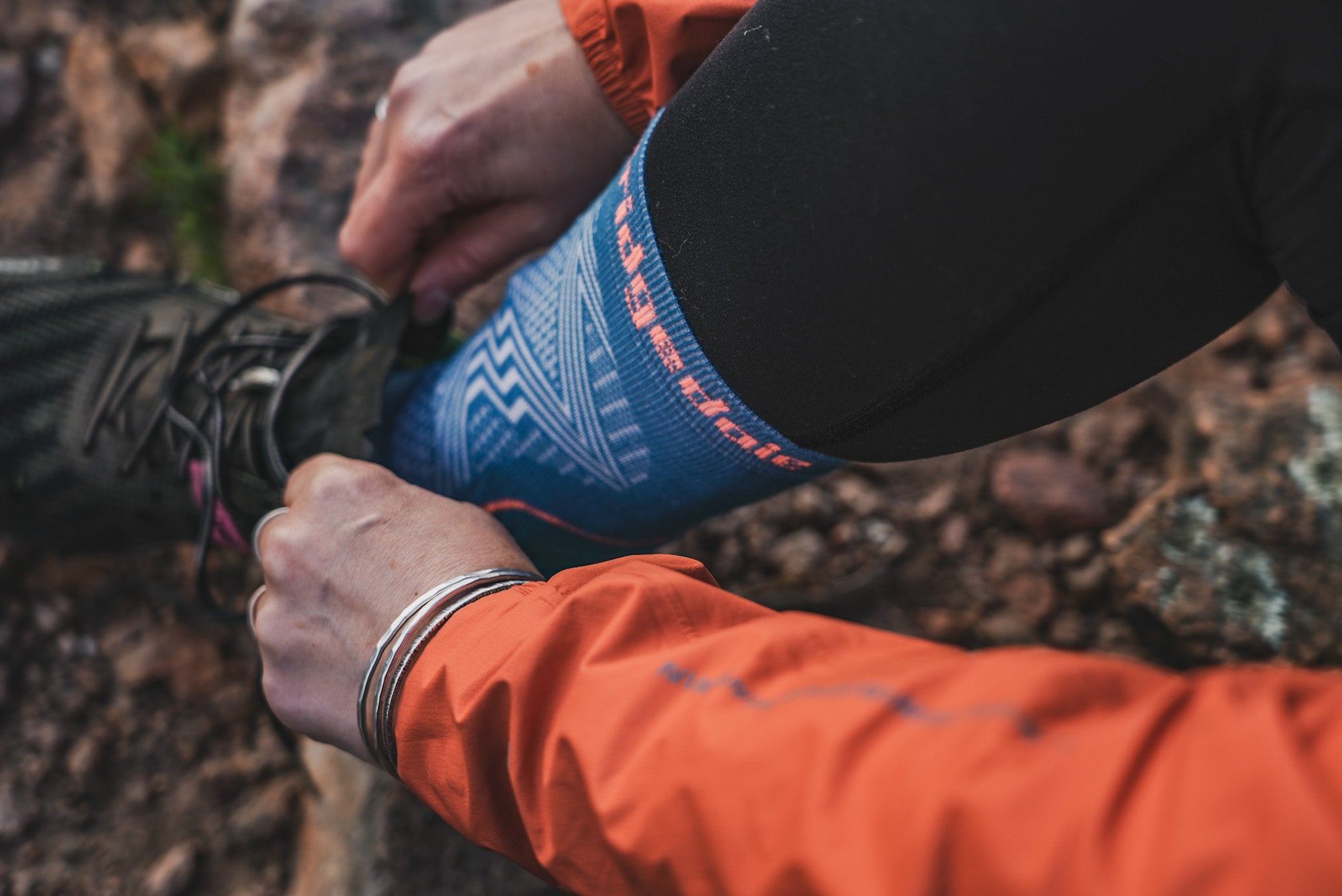
Blisters form through friction and moisture working together over time. Quality gear that doesn't slip or rub is exactly what you need to look for.
When your skin heats up from repeated rubbing, the outer layers separate, and fluid fills the gap. It sounds dramatic, but it really is that simple — and that preventable. The fix comes down to choosing the right socks with the right fit.
The good news?
Bridgedale have over 100 years of experience and have perfect the fit.
1. Start with your socks
The things you don't see matter the most
If you're still hiking in non-technical cotton socks, that's the problem. Socks matter more than you think. Basic non-blend cotton socks hold moisture against your skin, stays wet, and becomes a friction multiplier. Swap them out for merino wool, a quality synthetic blend, or a cotton synthetic blend (cotton has good properties too).
Socks that are technical with features made for hiking will give you more quality. You should be looking for a developed heel structure (our Precision Heel), invisible toe seam, and a Anti-Bunch Flex to stop bunching in areas of movement.
Seams in the wrong place are a surprising factor — they'll carve a hot spot into your little toe before you've gone a mile. Our Bridgedale socks put quality first over fashion, with the right features and a constructed Performance Fit with Lycra® fibre, creates the perfect fit.
Why Merino wool is a great fibre.

2. Make sure you are wearing the right boots
A boot that's too tight crushes your toes and creates pressure points. One that's too loose allows your foot to slide around on every downhill — and sliding is friction in slow motion.
You want snug at the heel, stable through the midfoot, and enough room at the toe box that you can wiggle all five toes without effort.
Our Socks work with the boots, both boots and socks need to be considered.
3. Control moisture with the right sock weight
Moisture and wet skin is softer, more pliable, and dramatically more vulnerable to friction damage than dry skin. Managing foot moisture isn't just about comfort — it's active blister prevention.
Sock weight plays a direct role here. Our Merino wool or synthetic socks wick moisture away from the skin.
Our Bridgedale sock weight differs from Heavyweight to Ultralight - so you have the one you need. We strategically place cushioning so you have the right level of warmth and breathability, which is key when going on winter or summer hikes.
For wet conditions — river crossings, persistent rain, morning drizzle on long grass — moisture management becomes even more critical. Synthetic socks are perfect for quick drying, our Coolmax socks are a great alternative when your needs change or waterproof socks eliminate the worry.
Don't forget to stop and rest to keep your body cool.

4. Cushioning Zones: why not all hiking socks are built the same
Take two socks of identical thickness and they can still perform very differently, because construction matters as much as bulk.
But what does Targeted cushioning zones actually mean?— a denser, more padded knit in key impact areas such as the heel and ball of the foot where impact and friction are highest.
Our Zonal Padding System & T2 Anti-Shock Cushioning feature is a loop within a loop construction that protects these key areas for an additional level of impact, for that added all day comfort.
A sock without cushioning zones lacks targeted protection . You'll feel the difference, once you're half way through your hike it will start to show in the heel as your skin and foot is supporting your steps.

5. Keep debris out - your socks are your first line of defence
Socks don't always get the glory. A well fitted knit, well-structured cuff, and the right sock height all play a role in keeping trail debris where it belongs — on the trail, below your boots, not in them.
Debris-caused blisters are particularly unforgiving. Unlike the general friction that builds slowly over miles, a sharp piece of grit or a fragment of bark creates a concentrated pressure point that can raise a blister quicker than you can notice.
It doesn't announce itself gradually — one minute things feel fine, the next you're uncomfortable. The sock's job is to act as a secure barrier, a well fitted hike sock should have a close and supportive fit to prevent anything irritating entering.
We take debris very seriously, our Performance Fit goes above and beyond in creating that barrier of protection. We use Lycra® throughout this fit, amongst our perfect blends using Fusion Technology to create a sock that not only performs but its comfort helps you remember the good memories
Don't forget to pair with a good pair of well fitted boots.
Your feet carry you further so make sure they are protected. Bridgedales are doing quiet work but you'll feel the difference.
Read more on Merino Wool and why we love this fibre so much. Understanding Merino wool👉

